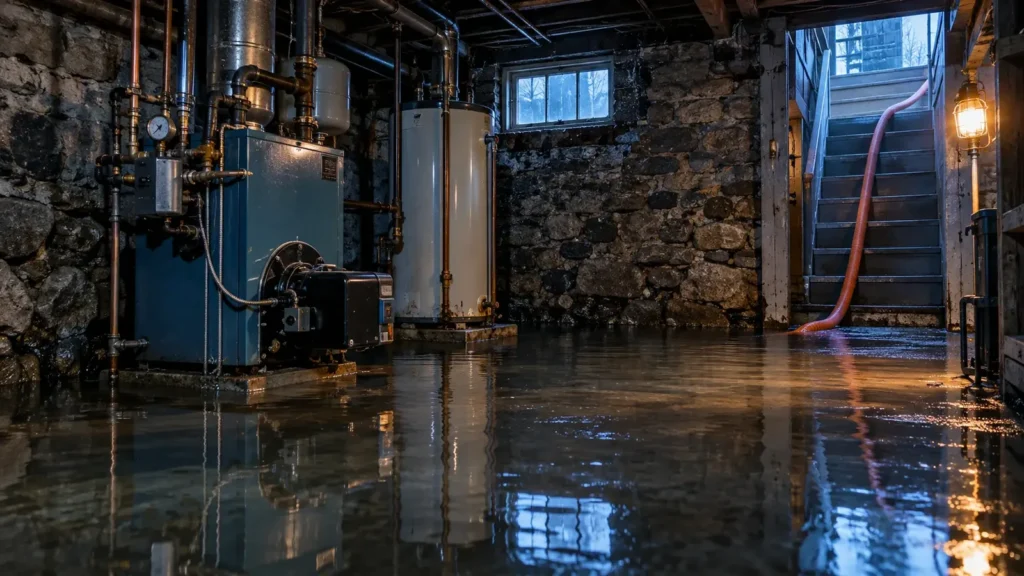
Do not walk into standing water if it is near the electrical panel, outlets, the furnace or the water heater. Shut the main valve if you can reach it safely, then call (413) 603-1274. We pump it out, fix the source and dry the basement in one call.
What flooded your basement?
The fix depends on where the water came from. Tell us what you see when you call.
- Burst or split pipe: clean water, often spraying from a pipe near the front wall or sill after a freeze
- Water heater: water spreading from the tank, sometimes rust colored
- Failed sump pump: water rising from the pit, often after heavy rain or snowmelt
- Washer hose or laundry sink: water around the laundry area
- Sewer backup: dark, smelly water at the floor drain. Treat this as sewage and keep people away
- Groundwater: seepage through walls or the floor during a long rain
Sewage is a different job with different safety steps. See sewage backup cleanup.
What to do in the next 10 minutes
- Stay safe. If water touches outlets, cords or the panel, stay out and call the power company or 911.
- Stop the water. Shut the main valve or the valve at the water heater, if you can reach it from a dry spot.
- Shut down gas appliances that got wet. Do not relight a flooded furnace or water heater until it is checked.
- Lift what you can. Boxes, papers and electronics off the floor.
- Take photos and video. Water level, damaged items and the source.
- Call us. (413) 603-1274.
Is it safe to go down there? Read is it safe to walk in a flooded basement.
One call: pumped out, fixed and dried
- Remove the water. Pumps and extractors take out standing water fast.
- Fix the source. Burst pipes, leaking valves and failed water heater connections are repaired on the same visit, so the basement does not flood again while it dries.
- Clear out what cannot be saved. Soaked carpet pad, cardboard and wet insulation come out.
- Dry the structure. Dehumidifiers and air movers dry the walls, floor, framing and the subfloor above.
- Check readings. We log moisture until the materials are back to normal.
Basements in Chicopee
Most Chicopee homes have full basements, many with fieldstone or block walls, and that is where the main water line, the meter, the boiler and the water heater usually live. Pipes along the front wall and the sill are the first to freeze in a cold snap. Older neighborhoods near the Connecticut and Chicopee rivers also see groundwater and storm runoff, and some streets have combined sewers that can push water back up floor drains in heavy rain. Finished basements with carpet, drywall and paneling need the most careful drying.
Is a flooded basement covered by insurance?
A burst pipe or a water heater that suddenly fails is usually covered under a homeowners policy. Groundwater and surface flooding usually are not, and sewer backup often needs a separate endorsement. Check your own policy. Our guide on sewer backup insurance in Massachusetts and burst pipe insurance explain the differences. General information only.
Areas we cover
All Chicopee neighborhoods and nearby towns. See areas we serve.
What usually has to go
Basements hold the things people keep for years, so this part matters. Clean water from a burst pipe gives you the best chance of saving things if they are dried quickly. Cardboard boxes, carpet pad, paper and particleboard shelving almost always have to go. Plastic bins, metal shelving, tools and most furniture legs can be cleaned and dried. If the water came from a sewer or floor drain, anything porous it touched is usually thrown out. Photograph items before they are removed so your insurer can see them. See contents pack-out.
Flooded basement questions
Can I pump it out myself?
A wet vac handles a little water. Inches of water need a real pump, and the walls and framing still need drying afterward, which a pump does not do.
Will my boiler or water heater be ruined?
Not always, but controls and burners that got wet should be checked before they run again. See can a flooded basement ruin your boiler.
How long does basement drying take?
Several days in most cases. Concrete, block and fieldstone hold moisture, and finished basements take longer. Readings tell us when it is done.
How much does it cost?
It depends on how much water, what kind of water and what was finished down there. You get the price before work starts. See flooded basement cleanup cost.
Basement flooding? Call now
Water in a basement keeps wicking into walls and up into the framing. Call (413) 603-1274 now. We pump it, fix it and dry it in one call.