In a Massachusetts rental, the landlord usually pays to repair the building after a burst pipe, while each tenant's renters insurance covers their own belongings and extra living costs. A tenant pays only if they caused the damage, for example by turning off heat they control in a cold snap. In condos, the master deed decides what the association covers and what the unit owner's HO-6 policy covers. Landlords and property managers with water coming down now can call (413) 603-1274.
Why this matters in Chicopee
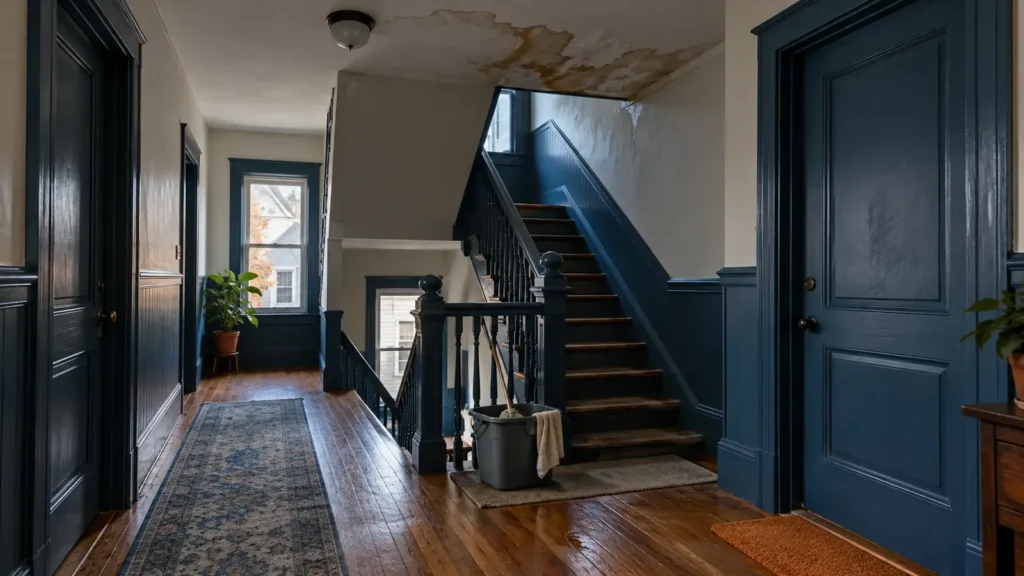
A large share of Chicopee homes are two- and three-family houses, many built before 1940, with stacked plumbing running through every floor. One burst pipe on the third floor can soak the ceilings and walls of the two apartments below. That means several people, several policies and a building that needs drying fast so tenants keep heat and water. This page is general information, not legal advice.
Who pays in a rental
| What was damaged | Usually paid by |
|---|---|
| Pipes, walls, ceilings, floors, fixtures | Landlord or landlord's insurance |
| Tenant's furniture, clothes, electronics | Tenant's renters insurance |
| Tenant's hotel and meals if unit is unlivable | Tenant's renters insurance (loss of use) |
| Damage the tenant caused by negligence | Tenant or tenant's liability coverage |
See does renters insurance cover burst pipes and apartment water damage in Chicopee.
Can a landlord charge the tenant?
Usually only if the tenant caused the freeze or leak: turning off heat they control, leaving windows open in a cold snap, or not reporting a known leak. If the pipe froze because the building was not heated to code, or because it runs through a cold porch or exterior wall, it is usually the landlord's problem. See can a landlord charge a tenant for frozen pipes.
The landlord's duties under the sanitary code
The Massachusetts State Sanitary Code (105 CMR 410) sets minimum standards for rental housing, enforced by the local board of health.
- Heat: from September 15 to May 31, habitable rooms at least 68°F from 7 a.m. to 11 p.m. and at least 64°F overnight, no hotter than 78°F. See Massachusetts landlord heat requirements
- Water: working hot and cold water supply
- Weathertight, dry structure: free of leaks and chronic dampness that harm health
- Mold: moisture and mold conditions that endanger health must be fixed. See Massachusetts mold rules
How fast must repairs happen?
An active leak, no heat or no water should be dealt with right away. If a landlord does not act, the tenant can ask the Chicopee Health Department to inspect, and the inspector's order sets deadlines, with the shortest for emergencies. See how long a landlord has to fix water damage.
When the pipe upstairs bursts
In a building with one owner, the owner's policy covers the structure on every floor and each tenant claims their own belongings. When units have different owners, as in a condo or a two-family split into two units, the owner where the leak started may be responsible if they were negligent. Often each owner's insurer pays its own customer and then sorts it out between them. See upstairs water damage: who pays.
Condos: master policy vs HO-6
- The master deed and bylaws say which parts belong to the association and which to the unit owner
- The association's master policy usually covers common elements like the structure, roof and shared pipes, and sometimes original unit finishes
- The unit owner's HO-6 policy usually covers interior finishes and improvements, belongings, loss of use, liability, and often your share of the master policy deductible
See HO-6 condo policy and water damage and condo water damage in Chicopee.
What landlords should do the moment it happens
- Shut off the water to the building or unit. Know where every shut-off is before winter. See gate valve vs ball valve
- Check every unit below the leak, and turn off power to wet areas if safe.
- Tell all tenants in writing what happened and when water and heat will be back.
- Photograph every affected unit before cleanup.
- Report the claim to your building insurer.
- Get the pipe fixed and drying started the same day, so tenants are not left without water and mold does not start.
See pipe burst in an apartment: what to do.
What tenants should do
- If water is spraying and you can reach the shut-off, close it.
- Call the landlord or manager right away, then follow up in writing.
- Move belongings out of the water and photograph damage.
- Call your renters insurer.
- If heat, water or a safe home is not restored, contact the local board of health.
How we help landlords and managers
Water Damage Pro fixes the pipe and dries every affected unit in one visit, works around tenants, records moisture readings unit by unit, and sends documentation to your insurer. For buildings with several units, we can also add unit shut-off valves and insulate the pipes that froze. See pipe freeze protection.
Leases cannot override the sanitary code
A lease clause that says the tenant is responsible for all plumbing, or for keeping pipes from freezing in a building where the landlord controls the heat, does not remove the owner's duties under the State Sanitary Code. The owner still has to provide heat, water and a structure free of leaks that harm health. A lease can make the tenant responsible for damage the tenant actually causes, and it can set reasonable rules, such as keeping the heat on in units where the tenant pays for it. If you are unsure whether a clause holds up, a lawyer or a local housing help line can tell you.
Security deposits and water damage
Massachusetts has strict security deposit rules. In general, a landlord can deduct only for unpaid rent, certain unpaid charges, and damage beyond reasonable wear and tear that the tenant caused, and must give the tenant an itemized list of damage with written evidence of the repair costs, sworn under the pains and penalties of perjury, within 30 days after the tenancy ends. Water damage from a burst pipe the tenant did not cause is not a valid deduction. Landlords who do not follow the rules can face serious penalties, so both sides should keep photos and written records.
Reporting problems is protected
Tenants in Massachusetts are protected from retaliation for reporting code violations to the board of health or asking the owner for repairs. A landlord should not raise the rent, threaten eviction or cut services because a tenant reported a leak, no heat or mold. For landlords, the practical lesson is simple: respond to repair requests quickly and in writing, and keep a record of when the problem was reported and fixed.
If the unit cannot be lived in
When a burst pipe leaves an apartment without heat, water or a safe place to sleep, the tenant may need to stay elsewhere while it is dried and repaired. The tenant's renters insurance usually pays extra living costs. Whether rent is owed for days the unit could not be used depends on the facts and the lease, and a board of health inspection may document that the unit was not fit to live in. Landlords should talk to tenants early about expected timelines.
A simple notice landlords can send
After a leak, send every affected tenant a short note, by text or email and on paper:
- What happened and when
- When water and heat are expected back
- Who will be entering the unit, and when
- That tenants should photograph their own belongings and contact their renters insurer
- A phone number for questions
Clear notice heads off most disputes. General information, not legal advice.
Before winter: a landlord's short list
- Service the boiler or furnace and check every thermostat
- Set up automatic oil delivery if the building heats with oil
- Insulate pipes along the front wall, the sill and enclosed porches
- Label the main valve and any unit shut-offs, and test them
- Give tenants a written contact for leaks and no-heat calls
- Plan for vacant units: heat on, or water off and drained
- Keep a copy of every tenant's renters insurance on file
Questions
Can a tenant withhold rent over water damage?
Massachusetts has specific rules for this tied to code violations and proper notice. Tenants should get legal advice before withholding rent.
Does the landlord have to pay for my hotel?
Usually your renters insurance pays loss of use. Whether the landlord owes more depends on the facts and your lease.
Who fixes mold after a leak in my apartment?
Moisture and mold that affect health are the owner's to correct under the sanitary code. Report it in writing.
Does the association fix a burst pipe in my condo?
It depends on whether the pipe is a common element under your master deed. Pipes serving only your unit are often yours.
Water in your building? Call now
Call (413) 603-1274 now. Pipe repair and drying in one call, locally owned in Chicopee.