The water you cannot see is the problem. Call (413) 603-1274. We dry walls, floors and ceilings with the right equipment and check them with moisture readings until they are really dry.
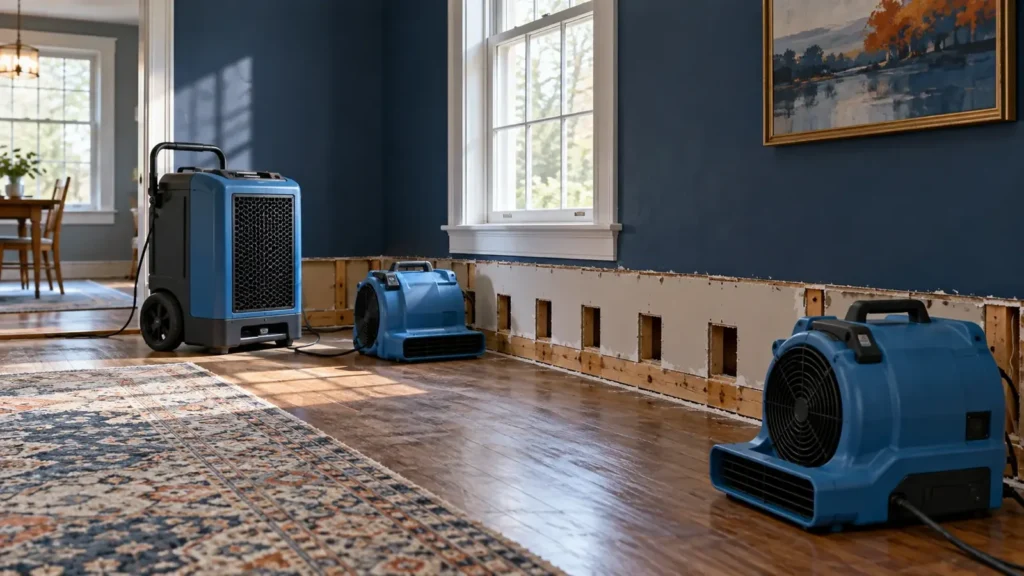
Why surfaces lie
A wall can feel dry to the touch while the plaster, the wood behind it and the insulation are still soaked. Hardwood can look fine while the subfloor under it stays wet. That trapped water is what leads to swelling, rot, peeling paint and mold weeks later. Drying is not done when it looks dry. It is done when the readings say so.
How we dry a house
- Map the moisture. We take readings in walls, floors and ceilings and mark how far the water spread.
- Remove what cannot dry. Soaked carpet pad, wet insulation and crumbling materials come out so air can reach the structure.
- Set the equipment. Dehumidifiers pull water out of the air. Air movers push dry air across wet surfaces. In wall cavities we can dry through small openings instead of tearing walls out.
- Control the room. Doors closed and temperature set so the equipment works efficiently.
- Measure every visit. Readings are logged and compared to dry, unaffected areas of the same house.
- Remove equipment when the numbers say dry. Then repairs can start.
What makes Chicopee houses slow to dry
- Plaster and lath. Common in homes built before 1950, it holds more water than drywall and dries more slowly. See why plaster takes longer to dry.
- Old hardwood floors over board subfloors, which soak up water and cup.
- Fieldstone and block basements that keep feeding moisture into the air.
- Multi-family framing. In two- and three-deckers the water travels through floor and ceiling cavities between units.
- Winter air. Cold weather slows evaporation, so the house has to be kept warm while drying.
Why fans are not enough
House fans move air but do not remove water from it. In a closed room, the air just gets more humid and the drying stalls. Commercial dehumidifiers pull gallons of water out of the air each day, which is what lets wet materials give up their moisture. See can fans dry water damage.
Part of every burst pipe job
Because we fix the pipe ourselves, drying starts right after the repair instead of waiting for a second company. That is usually the difference between drying in place and tearing out. See the full restoration process.
What "dry" actually means
Dry does not mean zero moisture. Wood, plaster and drywall always hold some water from the air. Dry means back to the same level as an unaffected part of the same house, in the same material. That is why we start every job by taking readings in a room the water never reached. Those numbers become the target. A wall is done when it matches them, not when it looks or feels dry.
Different materials dry at different speeds. Drywall over studs may reach the target in two or three days. Plaster on wood lath, old-growth floor joists and hardwood flooring can take longer. Concrete and fieldstone basement walls give up water slowly and may still read damp after the framing above is dry.
What a drying visit looks like
- Readings at the same marked spots as the day before, written down
- Equipment moved off areas that have reached the target and onto areas that have not
- Dehumidifier water checked and emptied or drained
- Anything new noted, such as a smell, a stain spreading or a floor cupping
- A plain answer on how many more days are likely
You should be able to see those readings. If a company pulls equipment without showing you numbers, ask why.
Keeping the house livable while it dries
Air movers are loud and dehumidifiers put out heat. In winter that warmth helps. In summer the room can get uncomfortable, and opening windows on a humid day slows drying. Keep doors to the drying area closed when we ask, leave the equipment running overnight, and do not unplug machines to save power. Every hour they are off adds time at the end. Your electric bill will go up slightly during drying. Keep a note of the dates, since some insurers reimburse it.
Drying questions
How long does drying take?
Often three to five days for a typical burst pipe, longer for plaster, hardwood or basements. The readings decide, not the calendar.
Can we stay in the house during drying?
Usually yes. The equipment is noisy and makes the rooms warm, and some rooms may be closed off.
Will the walls have to be opened?
Only where materials cannot be dried in place, such as soaked insulation or failed plaster. Small openings let us dry inside the cavity.
How do I know it is really dry?
Ask for the moisture readings. Every area should match a dry reference area of the same material before the job is called done. See how to tell if water is still in your walls.
Still damp? Call now
Call (413) 603-1274 now. Locally owned in Chicopee. See areas we serve.